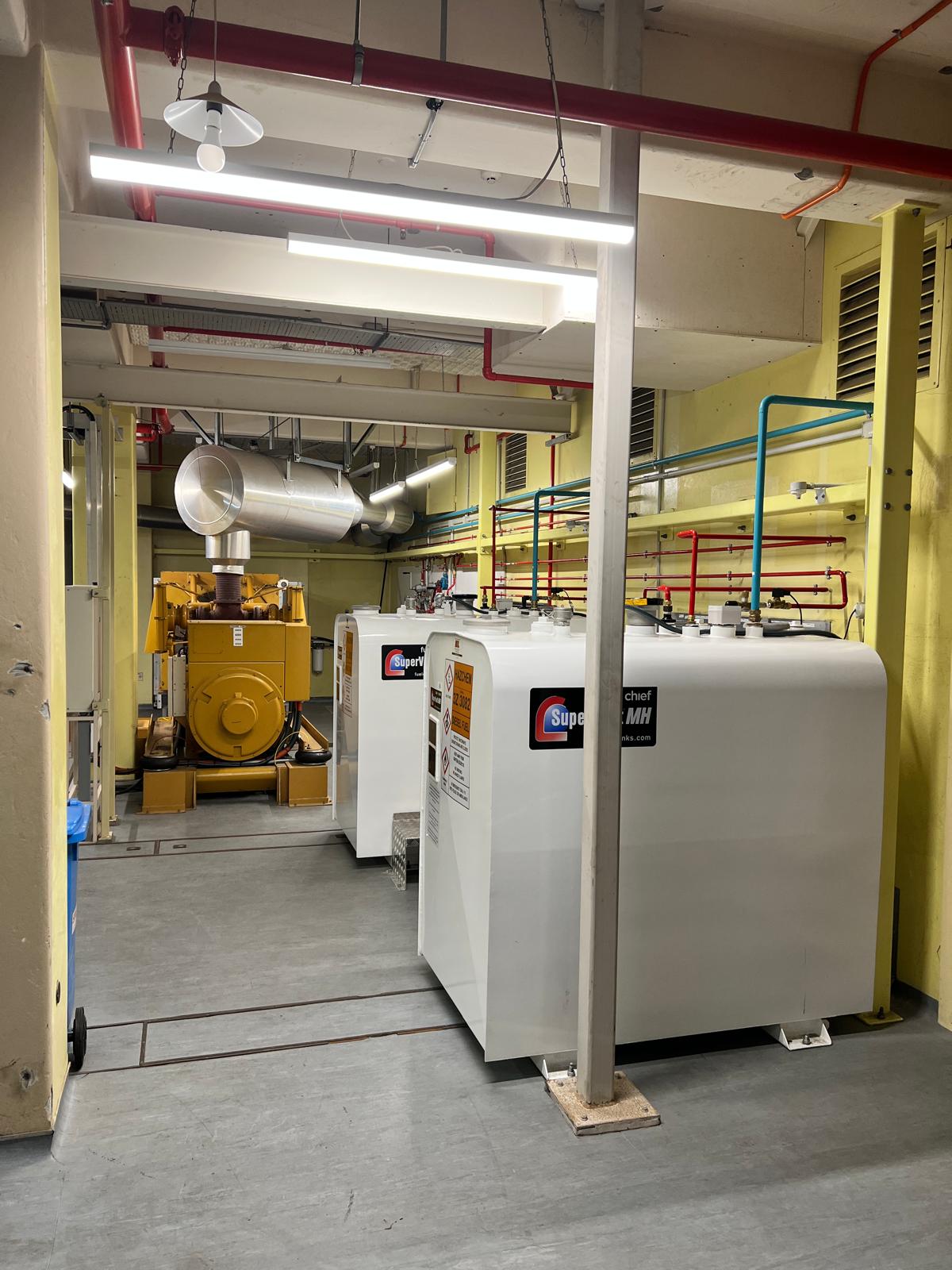
Emergency power and fuel storage rarely top the list of priorities when a commercial building is being designed. But leaving it as an afterthought has real consequences: service personnel end up working in cramped spaces that barely meet minimum safety requirements, and retrofitting equipment into a room that wasn't planned for it is far harder and more expensive than designing the space properly from the start.
Championing the energy supply room early, with open communication between designers, property developers, and electrical engineers, makes the difference between a space that works for decades and one that becomes a persistent problem. Here's a real example of what that looks like when space is tight, and what it looks like when it isn't.